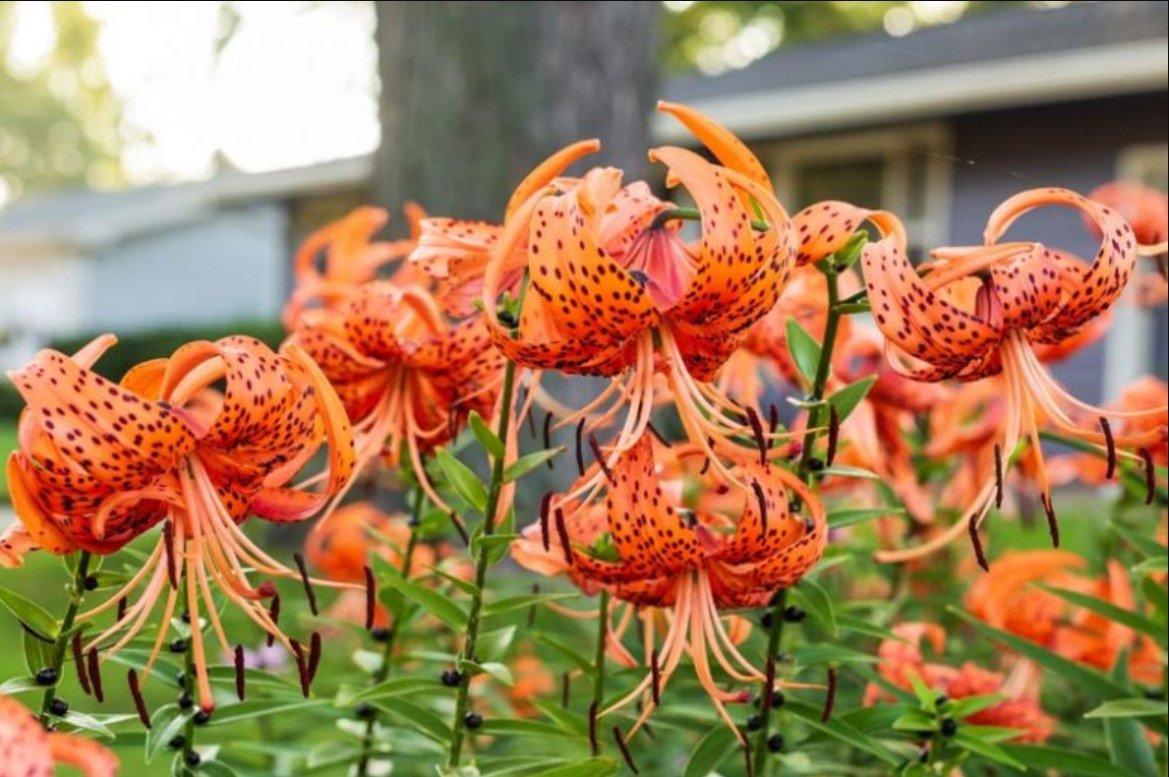
The tiger lily flower is one of the most striking and recognizable blooms in the world of gardening. With its vivid orange petals, dark spots, and graceful, recurved shape, it instantly captures attention and adds bold character to any landscape. Beyond its visual appeal, the tiger lily flower carries deep symbolism, rich history, and practical value for gardeners seeking low-maintenance yet dramatic plants.
This comprehensive guide explores everything you need to know about the tiger lily flower, from its origins and varieties to its cultural significance and expert care tips. Whether you are a beginner or an experienced gardener, understanding the unique qualities of the tiger lily flower will help you grow healthier plants and enjoy more vibrant blooms.
What Is a Tiger Lily Flower?
The tiger lily flower belongs to the genus Lilium and is scientifically known as Lilium lancifolium or Lilium tigrinum. Native to parts of Asia, including China, Japan, and Korea, this perennial plant has become widely popular across Europe and North America.
What makes the tiger lily flower distinctive is its bold orange color paired with black or deep maroon spots. The petals curve backward, creating a shape that resembles a tiger’s markings, which is how it earned its name. Unlike many delicate flowers, the orange tiger lily is hardy and resilient, capable of thriving in a range of climates.
The plant typically grows between three to five feet tall and produces multiple blooms on a single stem during the summer months. Its ability to multiply quickly through bulbils makes it a favorite among gardeners who want long-lasting displays with minimal effort.
Symbolism and Meaning of Tiger Lily Flower
The orange tiger lily holds significant symbolic meaning across different cultures. Traditionally, it represents confidence, wealth, pride, and prosperity. In Victorian flower language, gifting a tiger lily flower could convey boldness or even a sense of independence.
In some Asian traditions, the orange tiger lily is associated with good fortune and protection. It is often planted near homes to attract positive energy and ward off negativity. The bright orange hue also symbolizes enthusiasm and passion, making it a popular choice for celebratory gardens.
Also Read: Business Tips Robthecoins A Complete Guide to Smart Growth and Long-Term Success
Interestingly, the tiger lily flower can also represent duality. While it conveys beauty and strength, its wild growth pattern reflects freedom and untamed nature. This combination makes the tiger lily flower a meaningful addition to gardens that aim to reflect both elegance and natural charm.
Popular Varieties of Tiger Lily Flower
The tiger lily flower comes in several varieties, each offering subtle differences in color, size, and growth habits. While the classic orange orange tiger lily remains the most iconic, hybrid variations have introduced new shades and patterns.
Some varieties feature deeper orange tones with more pronounced spots, while others may display yellow or reddish hues. Double orange tiger lily types have layered petals, giving them a fuller and more ornamental appearance.
Despite these differences, most orange tiger lily varieties share similar care requirements and growth characteristics. This consistency makes it easy for gardeners to experiment with different types without needing specialized knowledge.
How to Grow Tiger Lily Flower Successfully
Growing a tiger lily flower is relatively straightforward, even for beginners. These plants are known for their resilience and adaptability, which makes them an excellent choice for a wide range of environments.
Soil and Location Requirements
The tiger lily flower thrives in well-drained soil with moderate fertility. While it can tolerate different soil types, slightly acidic to neutral soil conditions tend to produce the best results. A location that receives full sun to partial shade is ideal, as adequate sunlight encourages healthy blooming.
Planting and Propagation
The best time to plant tiger lily flower bulbs is in early spring or fall. Bulbs should be placed about four to six inches deep in the soil, with enough spacing to allow for growth. One unique feature of the tiger lily flower is its ability to produce bulbils along its stem, which can be used for propagation.
These bulbils can be collected and planted to grow new plants, making the tiger lily flower a cost-effective option for expanding your garden.
Watering and Fertilization
The orange tiger lily prefers consistent moisture but does not tolerate waterlogged conditions. Regular watering during dry periods helps maintain healthy growth. Applying a balanced fertilizer during the growing season can enhance flowering and overall plant vigor.
Care Tips for Healthy orange tiger lily Plants
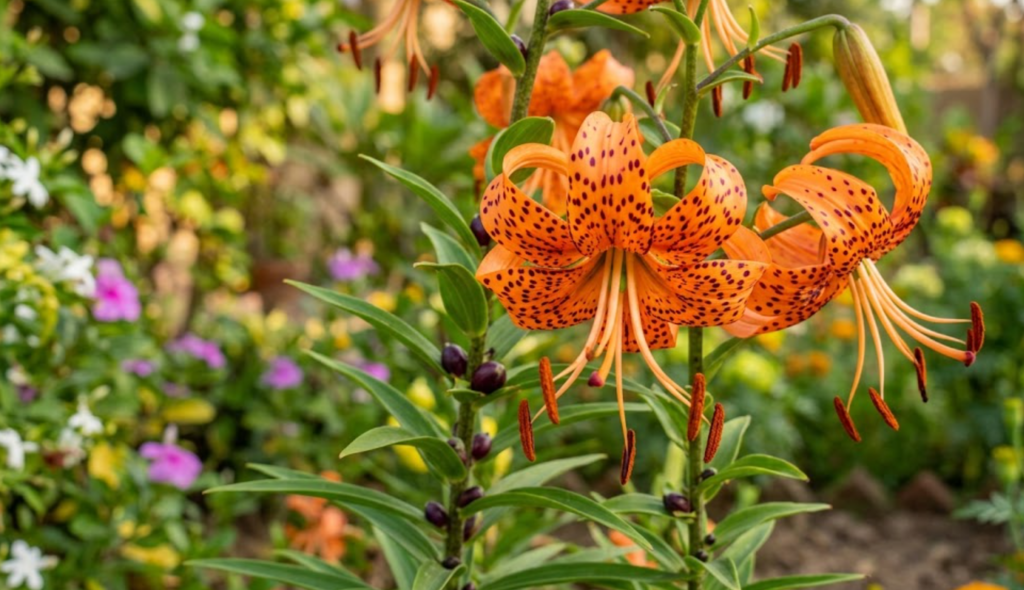
Proper care ensures that your tiger lily flower remains vibrant and disease-free throughout the growing season. While these plants are relatively low-maintenance, a few simple practices can make a significant difference.
Mulching around the base of the orange tiger lily helps retain moisture and regulate soil temperature. It also prevents weed growth, allowing the plant to access nutrients more efficiently. Deadheading spent blooms encourages the plant to focus its energy on new growth rather than seed production.
Staking may be necessary for taller tiger lily flower stems, especially in windy areas. This prevents bending or breakage and keeps the plant looking neat and upright.
Common Pests and Diseases
Like many garden plants, the orange tiger lily can be affected by pests and diseases. One of the most common threats is the lily beetle, which feeds on leaves and buds. Regular inspection and early intervention are essential to prevent infestations.
Fungal diseases such as botrytis blight can also impact the orange tiger lily, particularly in humid conditions. Ensuring proper air circulation and avoiding overhead watering can reduce the risk of disease.
Despite these challenges, the orange tiger lily is generally hardy and recovers well when given proper care.
Benefits of Growing orange tiger lily
The tiger lily flower offers several advantages that make it a valuable addition to any garden. Its bold appearance enhances landscape aesthetics, while its resilience reduces the need for constant maintenance.
The orange tiger lily also attracts pollinators such as bees and butterflies, contributing to a healthier ecosystem. This makes it an excellent choice for environmentally conscious gardeners.
Another benefit is its ability to naturalize. Once established, the orange tiger lily can spread and return year after year, creating a sustainable and long-lasting garden feature.
Tiger Lily Flower in Landscaping Design
In landscaping, the tiger lily flower serves as a focal point due to its vibrant color and unique form. It pairs well with other perennials and ornamental grasses, creating dynamic and visually appealing arrangements.
The height of the tiger lily flower makes it suitable for the back of garden borders, where it can provide structure and depth. It also works well in cottage gardens, where its natural growth pattern complements a more relaxed design style.
In modern landscapes, the tiger lily flower can be used to add a pop of color against neutral backgrounds, creating a striking contrast that draws the eye.
Cultural and Historical Significance
The tiger lily flower has a rich cultural history that spans centuries. In Asia, it has been used in traditional medicine and culinary practices. Certain parts of the plant are believed to have nutritional and therapeutic properties, although proper preparation is essential.
In Western culture, the tiger lily flower gained popularity during the 19th century as ornamental gardening became more widespread. Its exotic appearance and ease of cultivation made it a favorite among horticulturists.
Today, the orange tiger lily continues to be celebrated for its beauty and versatility, maintaining its status as a timeless garden classic.
Seasonal Care and Maintenance
Caring for a orange tiger lily throughout the year ensures consistent growth and blooming. During the growing season, regular watering and occasional fertilization support healthy development.
Also Read: CBYBXRF Exploring the Meaning, Uses, and Significance of a Mysterious Code
As the season ends, allowing the foliage of the tiger lily flower to die back naturally helps the plant store energy for the next cycle. Cutting back the stems too early can weaken the bulbs and reduce future blooms.
In colder climates, adding a layer of mulch provides protection against frost, ensuring that the orange tiger lily survives harsh winter conditions.
Conclusion
The tiger lily flower stands out as a remarkable combination of beauty, resilience, and cultural significance. Its vibrant blooms, easy care requirements, and ability to thrive in diverse conditions make it a valuable addition to any garden.
From its symbolic meanings to its practical benefits, the orange tiger lily offers something for every gardener. By understanding its needs and characteristics, you can cultivate a thriving display that enhances your outdoor space year after year.
Whether you are planting your first bulbs or expanding an established garden, the tiger lily flower provides a reliable and visually stunning option that continues to captivate gardeners around the world.
FAQs
Is the orange tiger lily easy to grow?
Yes, the tiger lily flower is considered one of the easiest lilies to grow. Its adaptability and resilience make it suitable for beginners and experienced gardeners alike.
How long does a tiger lily flower bloom?
The orange tiger lily typically blooms in mid to late summer. Each flower lasts several days, while the plant produces multiple blooms over a few weeks.
Can tiger lily flower grow in containers?
The tiger lily flower can be grown in containers, provided the pot has good drainage and sufficient depth to accommodate the bulbs.
Is the orange tiger lily toxic?
The tiger lily flower can be toxic to cats, so it should be kept out of reach if you have pets at home.
For more updates visit: The Tiger Casino