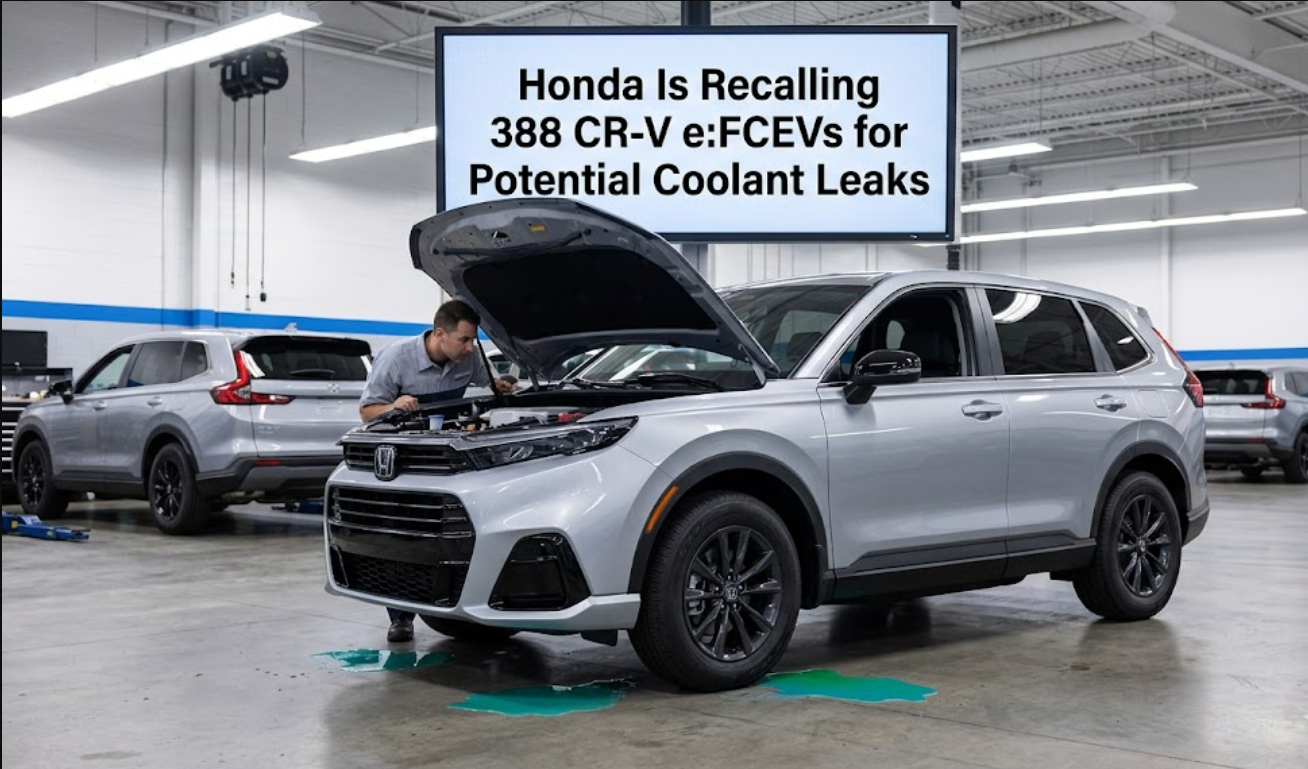
The automotive industry continues to move toward cleaner transportation, and hydrogen fuel cell vehicles are becoming an important part of that transition. Honda has played a key role in this space by launching innovative models that combine efficiency, lower emissions, and advanced engineering. However, even highly engineered vehicles can face manufacturing concerns that require prompt action. That is why Honda Is Recalling 388 CR-V eFCEVs for Potential Coolant Leaks has become an important topic for current owners, future buyers, and industry observers.
Vehicle recalls are a normal part of modern automotive safety systems. They show that manufacturers monitor product quality and take corrective steps when needed. In this case, Honda is addressing a potential coolant leak issue involving a limited number of CR-V e models. While the number of affected units is relatively small, the recall highlights the importance of preventative maintenance, safety inspections, and rapid manufacturer response.
This article explains what the recall means, why coolant systems matter, how hydrogen fuel cell vehicles operate, what owners should do next, and how this situation may affect consumer confidence. If you own one of these vehicles or follow electric and hydrogen mobility trends, this guide provides the information you need.
Understanding Why Honda Is Recalling 388 CR-V e for Potential Coolant Leaks
Honda’s recall focuses on a possible coolant leak that may develop within affected CR-V e vehicles. Coolant systems are essential because they help regulate temperature in multiple components. In advanced vehicles such as hydrogen fuel cell models, temperature management is even more critical because batteries, fuel cell stacks, power electronics, and supporting systems rely on stable operating temperatures.
When reports or internal testing indicate that a component may not meet expected standards, automakers often launch recalls before widespread problems occur. This proactive approach helps prevent future damage and protects drivers.
The statement Honda Is Recalling 388 CR-V e for Potential Coolant Leaks indicates that the issue affects a specific production group rather than the full vehicle lineup. That is common in the industry because recalls often relate to certain manufacturing dates, suppliers, or assembly batches.
What Is the Honda CR-V e?
The Honda CR-V e is a hydrogen fuel cell electric vehicle based on the popular CR-V platform. It combines familiar SUV practicality with next-generation clean energy technology. Instead of relying only on gasoline or a traditional battery-electric system, it uses hydrogen to generate electricity through a fuel cell.
This process produces electricity that powers the motor while emitting only water vapor during operation. That makes fuel cell vehicles attractive to drivers seeking lower emissions and faster refueling than many battery-electric alternatives.
Honda designed the CR-V e to bridge the gap between practicality and innovation. It offers cargo space, everyday comfort, and modern connectivity while introducing hydrogen mobility to mainstream consumers.
Why Coolant Systems Matter in Fuel Cell Vehicles
Coolant systems are often overlooked by everyday drivers, yet they are among the most important systems in modern vehicles. They help maintain proper temperatures so mechanical and electrical parts can function efficiently.
In hydrogen fuel cell vehicles, coolant can be used in the fuel cell stack, battery system, and electronic control units. If coolant leaks occur, several risks may emerge. Components may overheat, system efficiency could drop, warning lights may appear, or long-term damage may develop if left unresolved.
That is why Honda Is Recalling 388 CR-V e for Potential Coolant Leaks is significant. Even a minor leak can become more serious over time if ignored. Preventative repairs are often the safest and least costly solution.
Possible Causes of Coolant Leaks
Automotive coolant leaks can happen for different reasons depending on the vehicle design. In recall cases, the issue may involve seals, hoses, fittings, clamps, reservoirs, or manufacturing tolerances.
Sometimes a component may not have been installed to exact specifications. In other cases, a supplier part may fail earlier than expected under heat or pressure cycles. Because fuel cell vehicles contain advanced thermal management systems, manufacturers pay close attention to any sign of leakage.
Honda’s recall process likely includes inspections and replacement of affected parts where necessary. This allows the company to restore expected performance and reliability standards.
Signs Owners Should Watch For
Drivers should always pay attention to warning indicators and unusual vehicle behavior. If you own an affected model, staying alert can help you act quickly.
Common signs of a coolant-related issue may include dashboard warning lights, visible fluid beneath the vehicle, unusual smells, overheating alerts, reduced performance, or changes in cabin heating behavior. Some leaks may be small and difficult to notice, which is why official inspections are valuable.
Owners should not attempt complex repairs themselves. Modern fuel cell systems require trained technicians and specialized procedures.
What Owners Should Do Next
If your vehicle may be included in the campaign, the first step is to verify recall eligibility using the vehicle identification number through official Honda communication channels or an authorized dealership.
Once confirmed, schedule a service appointment as soon as practical. Recall repairs are typically completed at no charge to the owner. Technicians may inspect affected components, replace defective parts, refill coolant if needed, and confirm that systems operate normally.
The fact that Honda Is Recalling 388 CR-V e for Potential Coolant Leaks means the company is taking responsibility and offering a corrective solution. Responding early helps avoid inconvenience later.
How Recalls Protect Consumers
Some drivers worry when they hear the word recall, but recalls often demonstrate that a safety monitoring system is working correctly. Manufacturers gather field data, warranty claims, engineering reports, and testing results. If a trend appears, they coordinate with regulators and issue service actions.
Also Read: SEO by HighSoftware99.com A Complete Guide to Modern Search Optimization
This process benefits consumers because it creates accountability and encourages transparent corrections. In many cases, recalls happen before any serious incident occurs. Honda Is Recalling 388 CR-V e:FCEVs for Potential Coolant Leaks
The phrase Honda Is Recalling 388 CR-V e for Potential Coolant Leaks should therefore be viewed not only as a problem report but also as a quality control response.
Impact on Honda’s Reputation
Honda has built a strong reputation for reliability, engineering quality, and customer trust. A limited recall involving a small number of vehicles is unlikely to damage long-term brand strength if handled efficiently.
Consumers often judge companies less by whether issues happen and more by how those issues are resolved. Fast communication, free repairs, owner support, and clear guidance can reinforce confidence rather than weaken it.
Because fuel cell vehicles are still an emerging market, transparency matters even more. Buyers want reassurance that manufacturers stand behind advanced technology products.
What This Means for the Hydrogen Vehicle Market
Hydrogen mobility remains a promising part of the clean transportation future. Fuel cell vehicles offer fast refueling, long driving range, and reduced tailpipe emissions. However, widespread adoption still depends on infrastructure growth, public trust, and product reliability.
News that Honda Is Recalling 388 CR-V e for Potential Coolant Leaks may attract headlines, but it should be seen in context. All vehicle technologies, including gasoline, hybrid, battery-electric, and hydrogen models, experience recalls from time to time.
What matters most is continuous improvement. Each recall can lead to stronger engineering standards and better products in the future.
Maintenance Tips for Fuel Cell Vehicle Owners
Owners of fuel cell vehicles should follow factory maintenance schedules carefully. Thermal systems, software updates, filters, and inspections are especially important in advanced Honda Is Recalling 388 CR-V e:FCEVs for Potential Coolant Leaks powertrain vehicles.
Regular dealership visits help identify minor issues before they become major repairs. Keeping records of service history also protects resale value and warranty support.
Drivers should respond quickly to warning lights or performance changes. Waiting too long can increase repair complexity.
Comparing Recalls Across the Auto Industry
Recalls are common across the global auto industry. Millions of vehicles are recalled every year for software updates, brake concerns, battery inspections, sensor calibration, and fluid system issues.
A recall affecting 388 vehicles is relatively small compared with many large-scale industry campaigns. That smaller scope suggests the issue may be limited to a narrow production batch rather than a broad design failure.
Still, even small recalls deserve attention because each vehicle owner’s safety and satisfaction matters.
Should Buyers Still Consider the Honda CR-V e?
For many consumers, the answer may still be yes. The Honda CR-V e represents innovative engineering, cleaner transportation, and practical SUV design. One targeted recall does not automatically define the overall quality of the model.
Smart buyers should review official updates, warranty coverage, infrastructure access in their area, and long-term ownership needs. Every vehicle purchase should be based on total value rather than a single headline.
Honda’s willingness to address concerns can actually strengthen buyer confidence.
Conclusion
The news that Honda Is Recalling 388 CR-V e:FCEVs for Potential Coolant Leaks highlights the reality that even advanced vehicles may require corrective action after launch. More importantly, it shows how responsible manufacturers identify concerns and work to solve them quickly.
Also Read: Alhambra Night Visit Revenue Annual Revenue Alhambra Night Tour Revenue
For owners, the best response is to verify recall status, arrange service promptly, and continue following recommended maintenance practices. For consumers watching the hydrogen vehicle market, this event should be viewed as part of normal product improvement rather than a sign of failure.
Honda remains a respected automaker with deep engineering experience, and the CR-V e remains an important step toward cleaner mobility. With proper recall support and continued innovation, confidence in fuel cell technology can continue to grow.
FAQs
Is the Honda CR-V e recall serious?
The recall is precautionary and focuses on a potential coolant leak. Owners should schedule service promptly to prevent future complications.
Will Honda charge owners for repairs?
Recall-related repairs are usually completed free of charge through authorized dealers.
How do I know if my vehicle is affected?
Owners can check their VIN through official Honda recall tools or contact a dealership.
Can I keep driving the vehicle?
Owners should follow Honda guidance. If warning lights or unusual symptoms appear, service should be arranged immediately.
Does this recall affect all Honda CR-V models?
No, the announcement refers specifically to 388 CR-V e vehicles within a defined production group.
For more updates visit: The Tiger Casino